
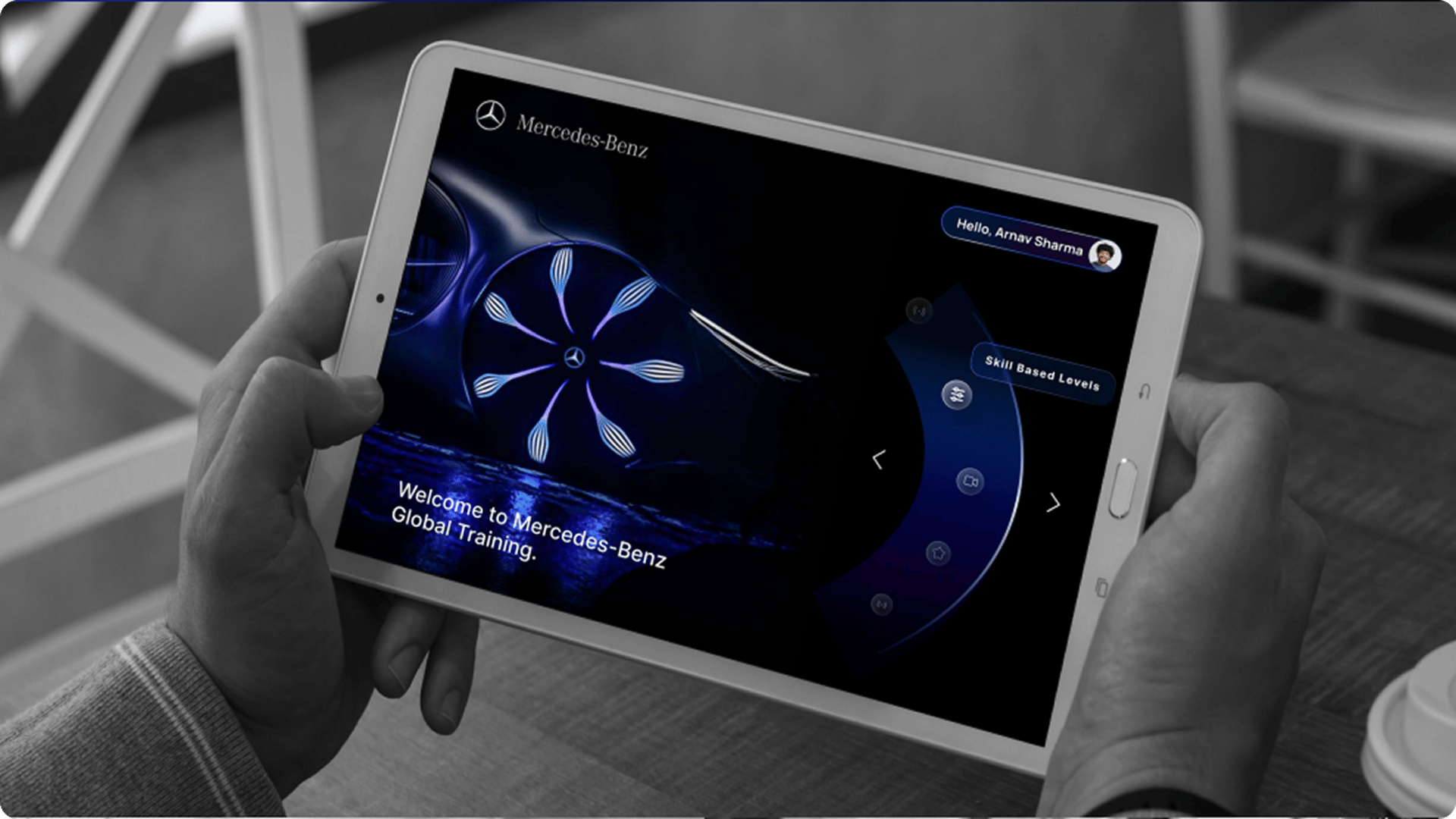
Automotive Training Transformation Through Gamified Learning
Case Study
Axionix helped reimagine a global automotive training ecosystem by replacing passive manuals and slide-based instruction with immersive, gamified learning. The solution enabled technicians and sales teams to practice real-world scenarios, improve confidence, reduce service errors, and strengthen customer-facing performance.
Overview
The automotive industry depends on highly trained technicians and confident sales teams. In this case study, Axionix helped transform a global training and learning system by shifting from traditional instruction to an immersive, gamified learning experience.
The existing training approach relied heavily on presentations, manuals, and theoretical content. While useful for information delivery, these methods did not give technicians and sales teams enough opportunity to practice real-world scenarios before applying their knowledge in live environments.
The Challenge
The organization needed a better way to train both technical and customer-facing teams.
Technicians required practical exposure to complex service scenarios involving critical vehicle systems such as airbags, chassis components, and other safety-sensitive areas. Without realistic practice, mistakes in live service environments could increase cost, delay resolution, and require senior engineers to intervene.
Sales professionals also needed stronger training experiences. Traditional content was not enough to build product confidence, customer-handling skills, or scenario-based readiness in showroom environments.
The core issue was clear: the training system needed to move from passive learning to active, experience-based learning.
The Journey
Axionix helped reimagine the training process by identifying gaps in the existing learning model and designing a more immersive experience for global users.
The solution introduced gamified learning through desktop and tablet-based applications. Instead of only reading manuals or viewing slides, technicians and sales teams could now practice scenarios, make decisions, receive feedback, and improve their performance in a safe virtual environment.
The Solution
For technicians, the platform simulated real-world vehicle service scenarios. These ranged from basic maintenance tasks to more complex repairs involving safety-critical components. The system allowed trainees to make mistakes virtually, understand the consequences, and improve before working on actual vehicles.
For sales teams, the platform introduced interactive learning modules focused on product knowledge, customer conversations, and showroom readiness. These modules helped sales professionals become more confident, better prepared, and more effective in customer interactions.
The overall solution combined UX design, learning experience design, gamification, and enterprise training transformation.
Business Impact
The transformed learning experience helped improve training effectiveness across both technical and sales functions.
Technicians gained practical confidence before entering live service environments. This helped reduce avoidable errors, improve service quality, and support safer repair outcomes.
Sales professionals benefited from better scenario-based preparation, improving their ability to answer customer questions and support revenue-generating conversations.
What This Case Study Shows
This case study demonstrates how enterprise learning can become more effective when training is designed around real-world behavior rather than static content.
For complex industries such as automotive, aviation, telecom, healthcare, and manufacturing, immersive learning can help teams build confidence, reduce operational risk, and improve performance at scale.

Contact
Email: hello@axionixtp.com
USA Locations
North Brunswick, NJ & Tampa, FL
C.O.N.T.e.X.T Framework™ is a proprietary AI Context Engineering methodology developed by Axionix Transformation Partners
© 2026. All rights reserved. Axionix Transformation Partners, USA.
Designing Non-Linear Transformation for AI-first enterprises.


Share your business challenge, transformation goal, or AI opportunity. We will help you think through the next practical step.